

Blogs
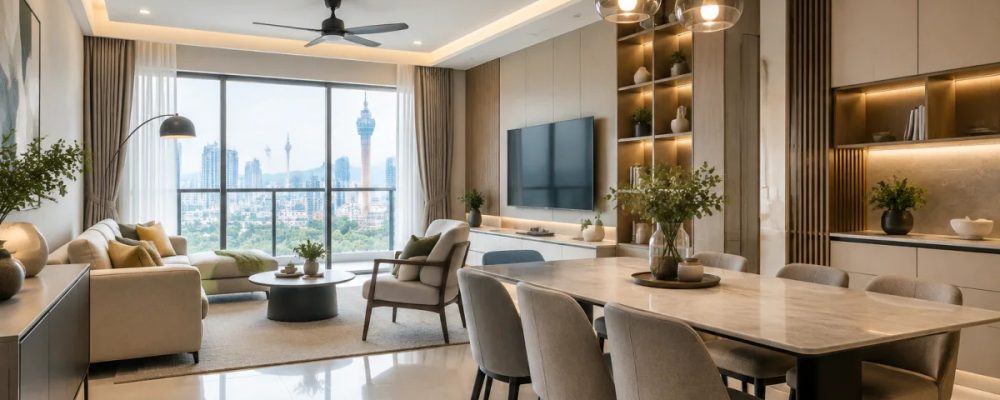
Modern Residential Interior Design Trends in Malaysia (2026)
1) Layout trends: cleaner plans, smarter zoning
“Modern” now means controlled openness: connected spaces, but better managed mess, noise, and airflow. Smart planning also helps cost control by reducing rework for electrical points, air-conditioning routes, and carpentry dimensions.Open-plan with soft boundaries
Homeowners still want open living–dining–kitchen flow, but with separation that doesn’t kill daylight. Common solutions include:- Half-height partitions with ledges or storage.
- Sliding or fluted glass panels to reduce cooking fumes and sound while keeping light.
- Ceiling and lighting cues (coves, downlight grids) to zone without adding walls.
Entry “drop zones” that hide clutter
Modern homes look modern when the first few meters are calm. The 2026 norm—especially for condos—is a compact foyer system for parcels, shoes, umbrellas, bags, and keys: closed shoe storage, a bench, mirror, and a concealed charging/keys drawer. Brief tip: Confirm your household habit early: “shoes-off at door” vs “shoes-off inside.” It affects storage depth, ventilation, and entry flooring choices.Home office zones that don’t look like an office
Instead of a full study room, many homes use work niches integrated into a hallway wall, dining side wall, or the master suite. The look is more furniture-like: warmer timber tones, concealed cable management, and lighting that flatters video calls. Brief tip: Specify requirements upfront (dual monitors, printer storage, sit-stand). A small change in desk depth can decide whether it’s comfortable or cramped.2) Materials and finishes: warmth, tactility, and honest textures
Modern residential interiors are moving away from wall-to-wall gloss. The prevailing direction is matte, tactile, and layered—chosen with Malaysia’s humidity and daily maintenance in mind.Stone look, used more strategically
Large-format porcelain “stone look” remains popular, but it’s used with more restraint: TV walls, kitchen backdrops, island cladding, or vanity feature walls—then balanced with warmer finishes so the home doesn’t feel cold.- Works best: TV feature walls, dining panels, dry kitchen backdrops.
- Watch out: Multiple heavy veined surfaces competing in one sightline.
Natural wood tones and stable alternatives
Timber is the quickest way to soften a modern palette. Many homes rely on stable, lower-maintenance options (laminate, veneer) and reserve natural timber as “hero” touches where it matters most visually or tactility-wise. Brief tip: Coordinate timber tones across floors, doors, and carpentry. Similar-but-not-matching shades can clash under warm lighting—sample under your actual lighting plan.Textured walls: subtle depth over ornament
Instead of heavy wall mouldings, the 2026 look leans into subtle texture: micro-cement style finishes, fine fluted/ribbed panels, fabric panels, or tone-on-tone wallcoverings. The goal is calm from afar, quality up close. Brief tip: Texture needs the right light. Grazing light can elevate it—or highlight defects. Align finish choice with the lighting plan early.Low-shine surfaces that feel “clean”
Matte cabinets, anti-fingerprint laminates, and lower-sheen paints create a calmer, more premium feel without relying on gloss. Done well, this delivers a refined look with fewer visual distractions. Brief tip: Matte can still show marks in high-touch zones. Identify risk areas (fridge panels, kids’ desks, tall-unit handles) and pick more forgiving materials there.3) Lighting trends: layered, human-centric, and glare-controlled
Lighting often determines whether a renovation feels premium or unfinished. In 2026, the focus is layering, comfortable warmth, and controlling glare—especially with large windows and reflective finishes.Three-layer lighting as the baseline
Most modern homes now plan lighting in three layers:- Ambient: general brightness (downlights, coves).
- Task: work lighting (kitchen counters, study desk, vanity).
- Accent: mood and depth (wall wash, shelf/picture lights).
Warmer, but zoned—not yellow everywhere
“Warm lighting” works best when zoned: warmer in living and bedrooms for comfort, slightly more neutral in kitchens and work zones for clarity. Brief tip: Don’t decide from a showroom ceiling. Test samples against your wall colour and timber; the same “warm” light can look elegant on beige and muddy on certain greys.Statement pendants used with restraint
Instead of decorative pendants everywhere, the modern approach is selective placement: one strong piece above dining, a foyer pendant (where ceiling height allows), or bedside pendants to free up table space. Brief tip: Confirm hanging heights early so pendants don’t block sightlines or clash with cabinet doors in compact layouts.Integrated LED details that feel architectural
Linear LED in coves, skirting recesses, and shelving remains popular, but the expectation is cleaner execution: concealed channels, better diffusers, and an even glow without visible “dots.” Brief tip: Ask how drivers and strips will be accessed for maintenance. Poor access can mean hacking finished panels later.4) Built-ins and custom carpentry: quieter design, stronger function
Carpentry is often the largest visual element—and one of the biggest budget items. The 2026 direction is less visual noise outside, more usability inside through better planning and internal organization.“Furniture-like” built-ins instead of wall-to-wall heaviness
Especially in condos, built-ins are designed to look lighter: floating bases, shadow gaps, slimmer frames, and a few open niches. The space reads modern without feeling over-fitted. Brief tip: Decide what must be closed vs displayed. Open shelves photograph well but can add daily cleaning; a balanced mix is usually most livable.Concealed storage and flush detailing
Flush doors, integrated pulls, and concealed hinges create the calm “gallery” look common in luxury interior design Malaysia projects—seamless lines and cleaner proportions. Brief tip: Flush detailing needs precision. Request a simple mock-up/detail for key areas (TV wall, tall units) so you understand joint lines, reveals, and door alignment.Hybrid kitchens: modern, practical, smell-conscious
Many Malaysian households still prefer separating heavy cooking from the living zone. The modern solution is a hybrid kitchen:- Dry kitchen: social, clean lines, display-worthy.
- Wet kitchen: durable finishes, stronger ventilation, typically behind a sliding door.
Wardrobes designed for real routines
Wardrobes are trending toward better internal zoning (long/short hang, drawers, pull-out trays, integrated lighting) while keeping exteriors calmer (solid panels, subtle texture, or one mirrored bay for visual expansion). Brief tip: Share a quick inventory (long dresses, suits, handbags, shoe types). A wardrobe feels “luxury” when it fits your actual belongings effortlessly.5) How to brief your designer: a practical checklist (and common mistakes)
Trends only help if they match your floor plan, lifestyle, and budget. Use this checklist to translate direction into clear instructions—whether you’re engaging an interior design firm in Klang Valley, PJ, or Kuala Lumpur.Your brief, simplified
- Priorities by space: pick your top 2 goals per area (e.g., living: concealed storage + warm ambience).
- Daily habits: shoes-on/off, cooking intensity, hosting frequency, work-from-home needs.
- Style direction: 3 adjectives (calm, warm, tailored) + 5 reference images with similar lighting.
- Storage map: what must be hidden (router, mop, luggage, toys) and where it should live.
- Material preferences: matte vs satin, timber tone range, stone look level (subtle vs bold).
- Lighting scenes: night pathway, entertaining, cleaning, movie, work.
Common mistakes to avoid
- Too many feature walls: choose one hero per main zone.
- Ignoring maintenance: excessive open shelving and high-gloss can become daily frustration.
- Not coordinating lighting with finishes: paint, timber, stone, and textures shift under different colour temperatures.
- Carpentry before lifestyle: function should support routines first; styling follows.
Conclusion: modern in 2026 means warmer, smarter, and more tailored
The most relevant modern residential interior design trends in Malaysia for 2026 share one theme: refinement. Layouts prioritize circulation and flexible zoning, materials are calmer and more tactile, lighting is layered for comfort, and built-ins are quieter on the outside but smarter inside. Your next step is to turn inspiration into a working brief so your designer can price, plan, and execute with fewer surprises. Done well, modern design doesn’t feel like a trend—it feels like a home that fits you. For additional inspiration beyond residential (especially if you also manage a workplace), you may also like this corporate interior project in Mid Valley to see how lighting layers and clean detailing translate into a polished environment.Ready to translate 2026 trends into a renovation plan?
Frequently Asked Questions
In Malaysia, “modern” typically means clean lines, practical space planning, and a calm palette—updated with warmer materials (timber, textured neutrals), layered lighting, and built-ins that hide clutter. The best modern homes feel tailored to lifestyle rather than looking like a generic showroom.
Use soft boundaries instead of full walls: a half-height divider with storage, sliding/fluted glass to control cooking fumes, and lighting or ceiling changes to zone areas. Balance open shelves with closed cabinets, and plan a proper entry drop zone so clutter doesn’t spread into the living area.
Matte or anti-fingerprint laminates, large-format porcelain with subtle stone patterns, and coordinated timber tones are common choices. Use textured walls selectively and pair stronger “statement” surfaces with quieter backgrounds to keep the interior refined and easier to maintain.
Ask your designer for a layered plan with ambient, task, and accent lighting, plus switching scenes (e.g., entertaining, movie, night pathway). Also confirm colour temperature by zone—warmer for living/bedrooms, slightly more neutral for kitchen/study—so the home feels comfortable and functional.
Start with a storage map: what must be hidden, what can be displayed, and who uses each zone. Request flush, quiet exterior detailing (clean reveals, integrated pulls) and smarter internal organisation (drawers, pull-out trays, long/short hanging). Confirm maintenance access for items like LED drivers and router compartments.
Conclusion
Luxury interior design today is no longer defined by how extravagant a space looks, but by how thoughtfully it is crafted to support everyday living. From warm minimalist palettes to layered materials and personalised detailing, each design direction reflects a shift towards spaces that feel timeless, functional, and deeply refined.
If you are planning to transform your home, Surface R offers luxury interior design Malaysia solutions that bring together thoughtful design, functionality, and lasting value, helping you create a space that feels refined and truly well designed. We have completed numerous luxury condominium projects in Petaling Jaya. Explore our interior design services in Petaling Jaya to learn more.